19 Easy Art Activities for 1-Year-Olds
Looking for easy art activities for 1 year olds? These simple toddler art ideas use washable paint, big sheets of paper, and plenty of room to explore—whether you have five minutes before dinner or a rainy afternoon to fill. Start with the lower-mess activities, then try finger painting or water play when you’re ready!
After that first birthday, curious little hands seem to want to touch everything. Art activities can be a great way to spend quality time together while your one year old experiments with colors, marks, and different textures. You don’t need a Pinterest-perfect finished product. Some of the best toddler crafts are really just opportunities to explore.
This collection was contributed by Sally of Life Loving, a UK-based mum of Austin and Autumn. Sally shares the activities she enjoyed with her children; I’ve also added practical setup tips, age-appropriate adjustments, and safety notes for families with young toddlers.
Looking for more age-appropriate play? Try these DIY sensory bags for babies and toddlers, or browse our easy toddler Halloween crafts when you want a seasonal art project.
Safety first: One-year-olds often explore with their mouths. Stay right beside your child, use art supplies specifically labeled for their age, and skip small objects, loose decorations, strings, elastic bands, and materials they may bite or swallow. “Non-toxic” does not mean edible. For water play, keep your toddler within arm’s reach at all times and empty the water immediately afterward. CPSC small-parts safety information and AAP water-safety guidance are useful references.
Note: Some links may be affiliate links. That means I may make a commission if you use my links to purchase, at no extra added cost to you! I only recommend products that I personally love and believe in. Full disclaimer here.
The Best Art Activities for 1 Year Olds
I’m lucky enough to have two lovable, slightly cheeky children, so I know that one year olds can be enthusiastic artists—and enthusiastic mess makers! I’ve included options for different energy levels and cleanup tolerances, with easy swaps when a material isn’t right for a child who still mouths everything.
Quick-Pick Toddler Art Ideas
- Low-mess: washable paint sticks (when labeled for your child’s age), water painting on the patio, and drawing on large paper with age-appropriate crayons.
- Some mess: chunky paintbrush painting, large sponge stamping, and parent-led paper collages.
- Messier sensory exploration: finger painting, supervised color mixing, and a shallow water table.
- Better saved for older children: salt dough, rubber bands, loose pipe cleaners, shaving cream, loose bubble wrap, and small cotton balls or pom poms.
Easy Supplies for One-Year-Old Art Projects
You probably already have some of these simple materials at home. Start with paper or a cardboard box as the painting surface, a towel or drop cloth to protect the kitchen table, and one or two colors of washable paint. For young toddlers, avoid overwhelming them with too many supplies at once.
- A shallow tray or water table for closely supervised water play
- Large sheets of paper or flattened cardboard boxes, taped securely to the table by an adult
- Washable, age-appropriate finger paints and a couple of thick-handled paintbrushes
- Large sponges or stamps designed for children under 3, with no detachable small parts
- An art smock or old T-shirt and a drop cloth or couple of towels
1. Finger Painting
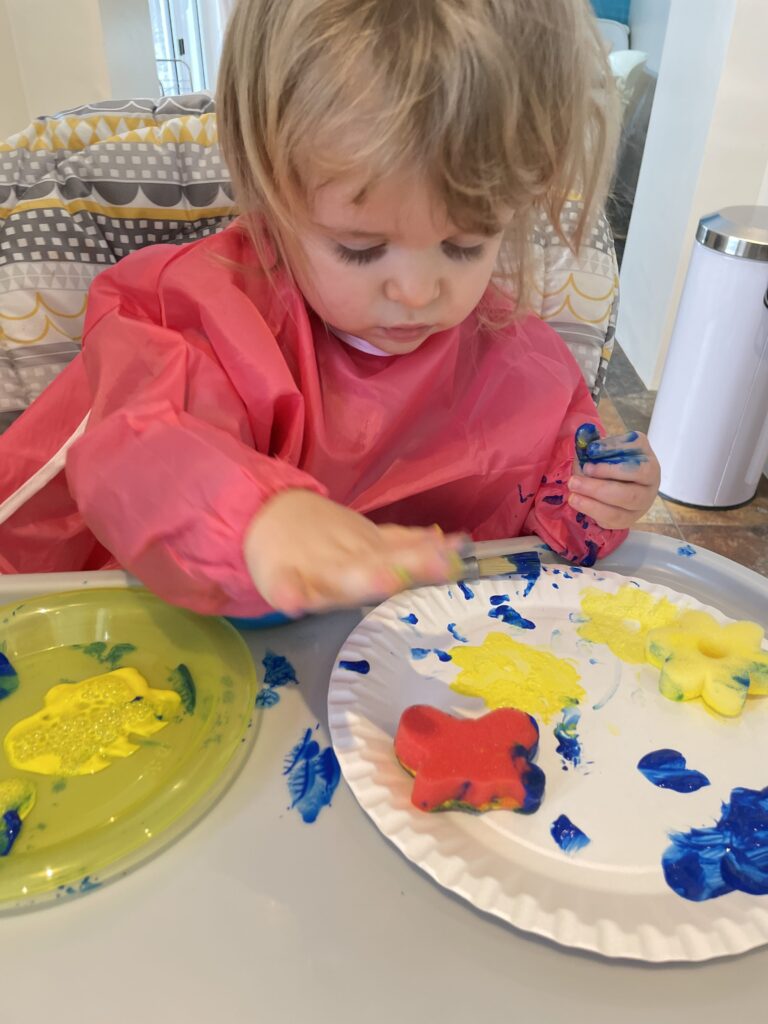
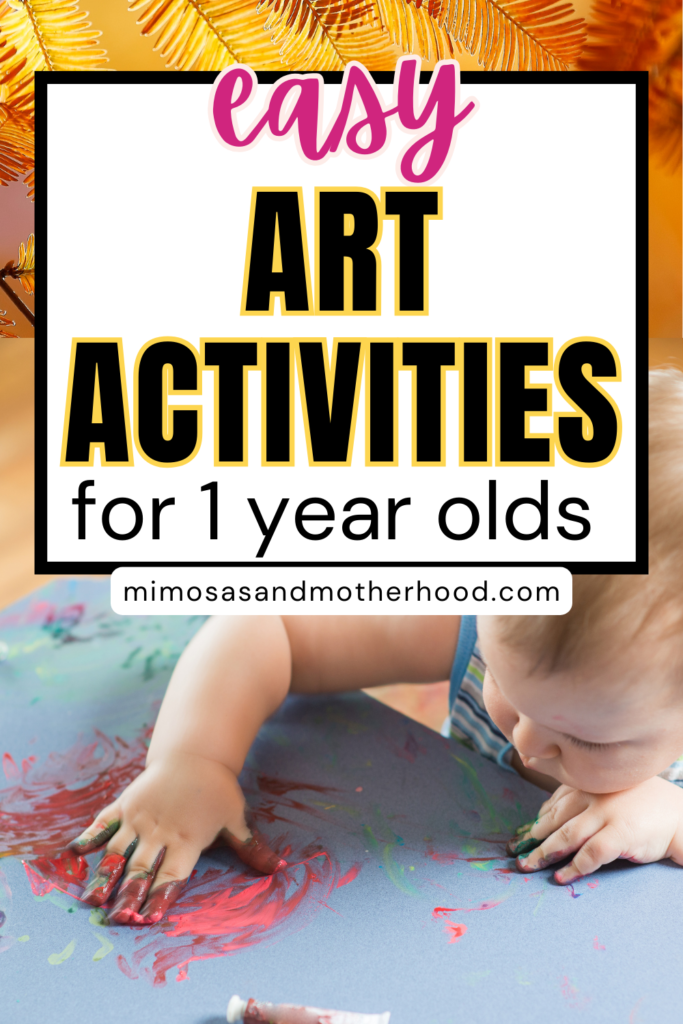
Finger painting is a classic sensory activity and one of the most fun art projects for little hands. Tape a large piece of paper to a wipe-clean surface, add a small amount of washable paint approved for your child’s age, and let them explore with their fingertips while you supervise closely.
They might make lines, pat the paint, or swirl colors together. It’s a simple way to explore cause and effect and begin using hand-eye coordination. If they dislike messy fingers, offer a thick-handled brush instead. A washable art smock is a nice bonus for quicker cleanup.
2. Brush Painting and Large Stampers
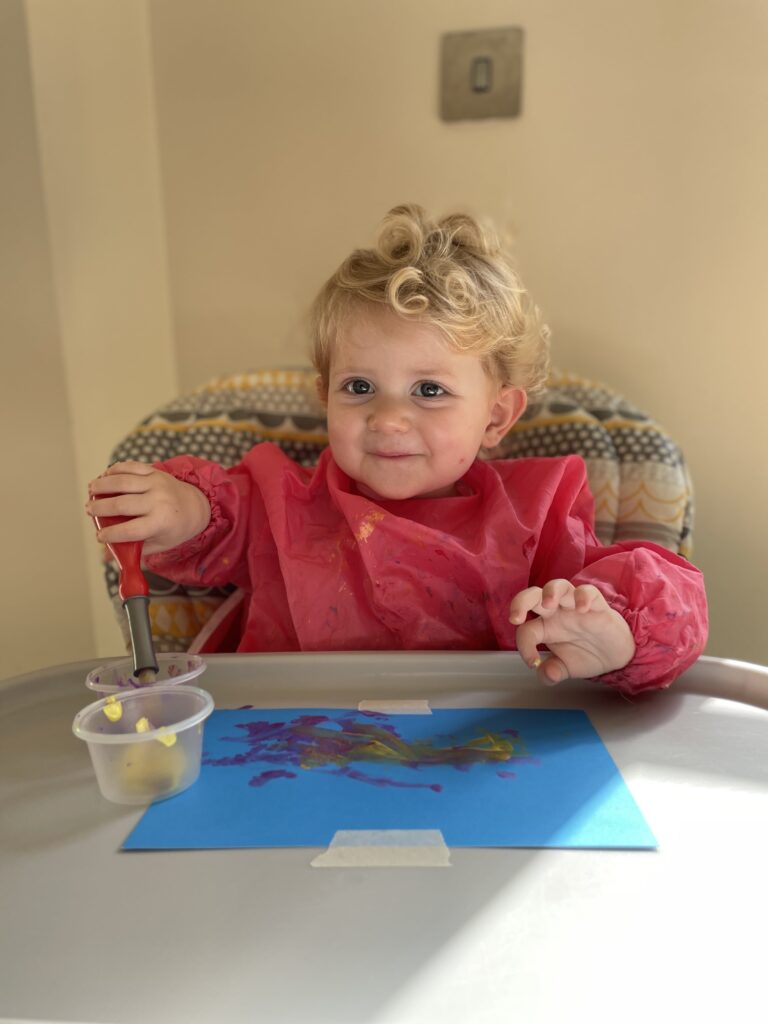
Brush and stamper painting has always been a favorite in our household. Put a little washable paint in a shallow, stable tray and offer a paintbrush with a big, chubby handle if it is suitable for your child’s age. Let your child dab, sweep, and make marks across a piece of paper.
For stamping, use one large, purpose-made toddler stamper or a big sponge, rather than small detachable stamps. Different shapes and textures keep this creative activity interesting without needing lots of new materials.
3. Sponge Painting
For another fun way to paint, offer a large, intact sponge that cannot be easily torn into small pieces, some washable paint, and a sheet of cardboard. Show your little one how to press the sponge onto the page and lift it away. There’s no right way for the finished product to look.
On warm days, try the lower-mess version: let your child press a damp sponge on the patio to make temporary water shapes. Stay right beside them and put the water away after playtime.
4. Washable Paint Sticks
If you love the idea of art activities but have a hard time embracing a full paint cleanup, try washable paint sticks only if the specific product is labeled appropriate for children this young. Many paint sticks are marketed for older toddlers, so age labels matter.
Offer a large sheet of paper and let your toddler experiment with marks and bright colors. If your paint sticks are not suitable for a one-year-old, substitute extra-large age-appropriate crayons for the same creative play idea.
5. Simple Color Mixing With Paint
Put two shades of washable paint in separate areas of a tray or an ice cube tray used only by the adult to portion supplies. Show your one year old how a little bit of one color can mix with another on the paper. Red and yellow or blue and yellow are fun starting combinations.
An ice cube tray can keep the colors organized, but remove it if your toddler tries to tip, chew, or mouth the compartments. For little fingers, the goal isn’t to teach color theory—it’s the sensory exploration of a new experience.
6. Big-Paper Scribble Art
Tape a big piece of paper to the table or floor and offer an age-appropriate chunky crayon. Your one-year-old can make marks, notice how the lines change, and work on controlling their movements. This is an easy art activity for rainy days when you want almost no cleanup.
Want to make a family keepsake? Write the date on the back and save the scribbles. A year later, it’s lovely to compare how their art has changed.
7. Tissue Paper Color Collage (Adult-Managed)
Tissue paper has interesting sounds and textures, and Sally’s original idea was to scrunch pieces into a colorful collage. For a one-year-old who mouths materials, though, loose torn tissue paper can be too easy to chew or swallow. Don’t offer the small pieces directly.
Instead, an adult can arrange tissue paper on a sheet of sticky contact paper and securely seal it under a second clear layer. Tape the edges down firmly and let your toddler press on the covered surface. Inspect the seal continuously and stop if any layer starts to peel. Save loose tissue-paper collages for children who no longer mouth their art supplies.
8. Water Painting on a Patio or Sidewalk
One of the easiest low-mess art activities for one year olds uses only a small amount of water, a large paintbrush, and a safe outdoor surface. Show your toddler how a wet brush makes a darker mark on the pavement and how it disappears as the water dries.
You get the joy of painting without stained clothes. Keep the water container out of reach except while you are actively supervising, and empty it immediately when you finish.
9. Supervised Water Table Color Play
A water table can be a great way to introduce color mixing and explore pouring. For one-year-olds, keep it simple: a shallow layer of plain water and a couple of large, age-appropriate bath toys or pouring cups. You can add a tiny amount of food coloring if desired, knowing it may stain.
Avoid droppers, pipettes, ice cubes, or other small parts unless they are expressly designed for this age group. Keep an adult within arm’s reach at all times, even when the water looks shallow, and drain the table after every session.
10. Cardboard Tube Firework Stamping (Adult-Prepared)
Sally’s original toilet-roll fireworks craft is such a clever stamping idea. An adult can snip one end of a sturdy cardboard tube into wide tabs and fold them outward to make a firework shape. Check that the tabs cannot tear away and that no sharp edges remain.
Offer the prepared tube to a child who can handle it without chewing or pulling pieces off. Dip it into washable paint and press it onto a large sheet of paper. If the tube breaks apart or your toddler mouths it, stop and use a large toddler-safe stamp instead. Older children can help prepare the tube themselves.
11. Textured Cardboard Collages
Cardboard boxes and larger pieces of construction paper are inexpensive materials for creative art. For this version, the adult cuts and attaches the pieces to a large base. Let your toddler pat, point to, and explore the different textures while you hold everything securely.
For children who no longer mouth paper or card, you can gradually offer larger precut shapes and help them glue. Small foam shapes, loose pom poms, and tiny pieces of card are not good choices for one-year-olds.
12. Baby-Safe Sensory Painting Without Loose Materials
If your toddler is curious about sensory activities but still puts everything in their mouth, a fully sealed painting surface can be a practical alternative to loose craft supplies. Put a little washable paint inside a durable, securely sealed sensory bag designed and inspected by an adult, then anchor it where they can press the colors through the plastic under constant supervision. Stop immediately if the bag shows signs of tearing, leaking, or opening.
For an example of the setup and extra precautions, see our DIY sensory bags for babies and toddlers. Plastic bags are not safe toys by themselves and must never be left with a child unattended.
13. Homemade Play Dough: Save for an Older Toddler
Homemade play dough can be a wonderful sensory experience for older children, and Sally enjoys using cutters and stampers with it. However, typical play dough contains salt and is not intended to be eaten. Commercial Play-Doh is labeled for ages two and up; for a one-year-old who still tastes materials, skip this activity for now. Poison Control explains why age recommendations and mouthing matter.
When your child is ready for age-appropriate dough play, you can revisit pressing, rolling, and making different shapes together.
14. Salt Dough Keepsakes: Adult-Made for Now
Sally originally suggested salt dough ornaments and impressions, a lovely way to make personalized keepsakes. But traditional salt dough has a high salt content, so it isn’t appropriate to offer as a hands-on material to a one-year-old who may taste it. An adult can make the keepsake, or you can wait until your child is older and reliably keeps materials out of their mouth.
For a different keepsake idea, see these air-dry clay Christmas ornaments, and check the product’s age recommendations before inviting a child to participate. Sally also has a salt dough tutorial for older children and adults.
15. Pipe Cleaners and Rubber Bands: Better for Older Kids
Pipe cleaners can be fun for making different shapes, and Sally uses them in projects like coffee filter butterflies and pipe cleaner candy canes. But the ends can be sharp and pieces can detach, so I wouldn’t hand them to a one-year-old for free play. Rubber bands also pose a risk of snapping, entanglement, and being swallowed.
Save these for older children who can use them safely with supervision. For a younger toddler, replace them with an age-appropriate drawing or big-brush painting activity.
16. Cotton Balls and Small Pom Poms: Choose a Safer Alternative
Cotton balls and pom poms show up in lots of craft ideas, including paint stamping. But loose small, soft pieces can end up in a toddler’s mouth. Rather than having a one-year-old grasp loose cotton balls, try the large intact sponge painting activity above, or use a toddler-safe stamper with an attached handle.
17. Bubble Wrap Painting: Keep It Adult-Only for Now
Bubble wrap is tempting because the texture is so interesting. Sally’s original craft taped it to cardboard for sensory exploration. For a one-year-old, however, I would avoid direct play with loose bubble wrap or packaging film because it can tear into pieces and create a suffocation hazard.
A safer alternative is a textured, age-rated sensory board or a securely assembled activity designed for infants and young toddlers. Skip bubble-wrap popping until your child is older.
18. Shaving Cream Art: Wait, or Use Toddler-Appropriate Materials
Shaving cream can create fluffy, colorful sensory art, and Sally’s daughter has enjoyed using it at nursery. But ordinary shaving cream isn’t formulated as a toddler craft material and can irritate eyes or cause stomach upset if swallowed.
For one-year-olds who may taste their supplies, choose an age-appropriate finger paint instead. Read Poison Center guidance on shaving cream exposure.
19. Washable Ink Pads: Check the Age Label
Sally recommends washable ink pads for fingerprint designs. Some ink pads are designed specifically for baby handprints, but many craft ink pads and small stampers are not intended for one-year-olds. Check the exact label, ingredients, and intended use before trying one.
For now, an adult-assisted handprint using age-appropriate washable finger paint may be the simpler option. If you do make a print, wash hands afterward so paint isn’t transferred to your child’s mouth.
Frequently Asked Questions About Art Activities for 1 Year Olds
What art activities are easiest for a one-year-old?
Start with large-paper scribbling, age-appropriate finger painting, big-brush painting, or water painting on a patio. Each involves simple materials and can be stopped whenever your little one loses interest.
Are sensory activities good for one-year-olds?
Sensory activities can offer opportunities to explore textures, colors, and cause and effect. The key is matching the experience to the child’s development and ability to use the materials without putting them in their mouth. A low-mess sensory bag or large paintbrush may be a better starting point than loose craft materials.
How long should a toddler art activity last?
There’s no magic number of minutes. A few happy minutes of free play can be plenty. Follow your child’s cues; if they are frustrated or more interested in the supplies than the craft, put it away and try another day.
How can I make toddler art less messy?
Tape down the paper, use a drop cloth, put out one color at a time, and have a couple of towels ready. For a new experience with almost no cleanup, try water painting outside or a large sheet of paper with age-appropriate crayons.
More Helpful Resources for Families With Young Toddlers
- How to Make Sensory Bags for Babies and Toddlers
- Food and Meal Ideas for 1 Year Olds and Toddlers
- Montessori Toys for 1-Year-Olds
- Easy DIY Halloween Crafts for Toddlers
Final Thoughts on Easy Art Activities for 1 Year Olds
The good news is you don’t need an elaborate art station or a gorgeous finished product to have fun. Some of the best art activities for one year olds involve one sheet of paper, one color of washable paint, and a few minutes together.
When your child finishes a piece of art, write the date on the back. Those little scribbles and handprints become such sweet reminders of this stage. And if the activity lasts only three minutes before they’re done? That counts, too.
Thank you to Sally of Life Loving for sharing her family’s ideas and photos. Sally’s original suggestions inspired this collection; the age-specific safety adjustments above are editorial updates for readers with one-year-olds.
If you enjoyed this craft, be sure to pin it on Pinterest using the image below to make it easier to find next time!




Thanks for having me over to guest post! We’re going to be doing some Halloween painting today. I’ve been saving the purple and orange sparkly paints for our spooky crafts.
I love that! Halloween crafts are such a fun activity =)